EDUCATION
best executive mba programs, best executive mba programs in usa, best online mba programs, best online mba programs in the world, executive business degree online programs, executive mba online, executive mba programs online, global executive mba judge business school, master’s degree in business administration, mba program for executives, online business degree, online degree, online executive mba, online mba degree, online mba programs, online mba vs executive mba, online vs regular executive mba, top executive mba programs, top online mba programs
admin
0 Comments
Executive Business Degree Online Programs: The 2026 Guide for Senior Leaders

Why Senior Leaders Choose Online Executive Business Degrees
In the upper echelons of corporate leadership, standing still is the same as moving backward. The business landscape of 2026 demands executives who can navigate artificial intelligence integration, global supply chain volatility, ESG compliance, and digital transformation—all while steering organizations toward sustainable growth. An executive business degree online program is no longer a luxury credential; it is a strategic imperative for leaders who refuse to let their skills atrophy.
According to the U.S. Bureau of Labor Statistics, top executives command a median annual salary of $246,440, while computer and information systems managers earn $173,670 and financial managers pull in $166,050. These figures represent the financial rewards of executive leadership, but they also reflect the intense competition for these roles. In an environment where boardrooms increasingly favor data-driven strategists over intuition-based managers, formal advanced education separates those who ascend from those who plateau.
The Graduate Management Admission Council (GMAC) reports that MBA graduates earn a median base salary of approximately $125,000 annually, significantly outpacing non-MBA professionals in comparable roles. For executives specifically, the Executive MBA Council found that the average post-graduation salary increase exceeds 14%, with many graduates seeing far greater gains as they transition into C-suite positions.
What makes online executive programs uniquely attractive is their architecture around the lives of busy leaders. These are not repurposed undergraduate courses or traditional MBAs with a webcam attached. They are meticulously designed experiences that assume you are running a division, managing a P&L, or leading hundreds of employees while you study. The asynchronous coursework, global cohorts, and immediate applicability of concepts to your current organization create a learning loop where your classroom work directly enhances your quarterly results.
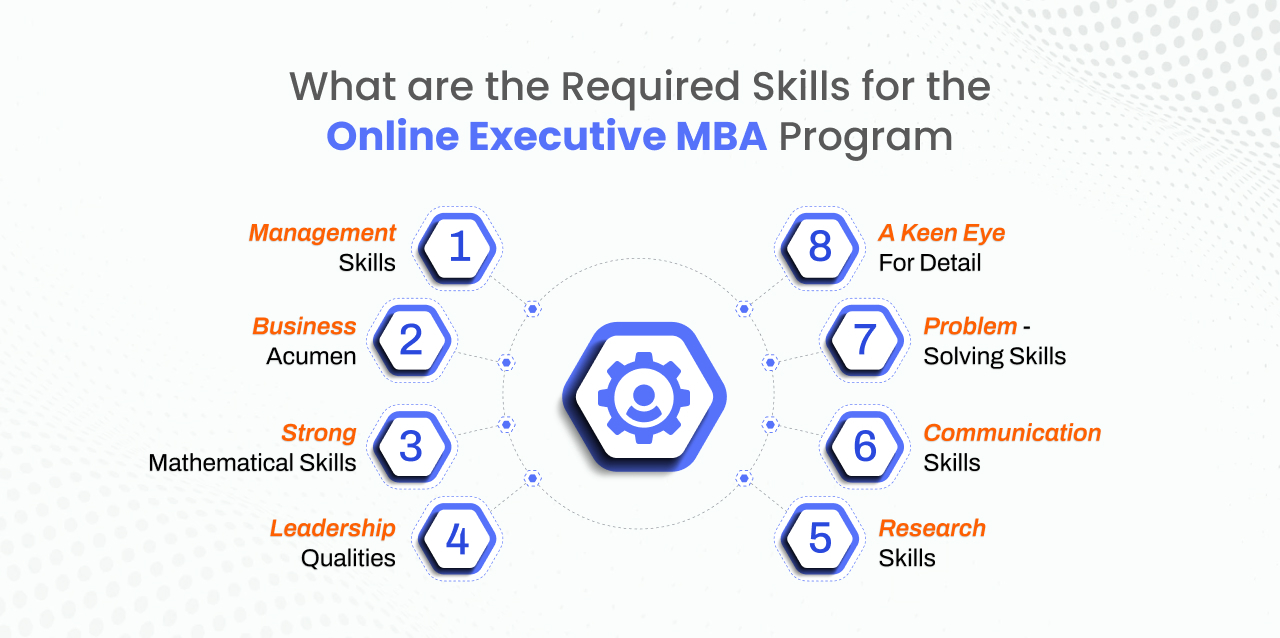
Executive MBA vs Traditional MBA: What Is the Difference
Before investing six figures and 18 months of your life, you must understand the fundamental distinction between an Executive MBA (EMBA) and a traditional MBA. While both confer the same terminal degree, their target audiences, delivery methods, and outcomes diverge significantly.
Target Audience
Traditional MBA programs typically cater to early-career professionals and career switchers with 2–5 years of experience. These students often seek internships, career placement services, and foundational business knowledge. Executive MBA programs, by contrast, are designed for seasoned professionals with 8 to 15 years of experience, including substantial time in leadership roles. The average EMBA student is a director, vice president, or C-suite executive who already possesses deep functional expertise and seeks to broaden their strategic perspective.
Program Structure and Pace
Traditional MBAs often require full-time attendance or heavy part-time commitments that disrupt work schedules. Executive business degree online programs are built around the assumption that you will remain fully employed. Courses are delivered in intensive modules, asynchronous formats, or weekend residencies that minimize disruption. Most programs range from 12 to 24 months, with accelerated tracks available for those who can dedicate more concentrated time.
Curriculum Emphasis
While both programs cover finance, marketing, operations, and strategy, EMBA curricula emphasize executive leadership, organizational transformation, global strategy, and complex decision-making. The pedagogy relies heavily on peer-to-peer learning, where students analyze case studies drawn from their own organizations and industries. Traditional MBAs focus more on building foundational skills and preparing students for their first management roles.
Networking Dynamics
In a traditional MBA, networking happens through career fairs, internships, and campus events. In an executive program, your classmates are senior leaders from Fortune 500 companies, healthcare systems, government agencies, and successful startups. The networking is horizontal—you are building relationships with peers who can become board members, investors, clients, or strategic partners.
Financial Model
Traditional MBA students often self-fund through loans and scholarships. Executive MBA candidates frequently receive employer sponsorship covering 25% to 100% of tuition. Companies recognize that an EMBA immediately benefits the organization as students apply lessons in real time to current business challenges.

Top 10 Executive Business Degree Online Programs in 2026
The following programs represent the best balance of academic prestige, career outcomes, flexibility, and value for senior leaders seeking an online executive business degree.
1. University of North Carolina at Chapel Hill – Kenan-Flagler Executive MBA Online
UNC Kenan-Flagler consistently ranks among the top executive MBA programs in the United States. The online format delivers the same rigorous curriculum as the on-campus program, with quarterly leadership summits held in Chapel Hill or international locations.
-
Tuition: ~$125,590
-
Duration: 18–24 months
-
Accreditation: AACSB, SACSCOC
-
Graduation Rate: 92%
-
Standout Feature: Access to a 51,000+ alumni network and personalized executive coaching
2. University of Pennsylvania – Wharton Executive MBA Online
Wharton remains the gold standard for executive education. While primarily known for its on-campus EMBA in Philadelphia and San Francisco, Wharton’s digital executive education offerings and hybrid options provide unmatched brand prestige.
-
Tuition: ~$238,620 (includes program fees)
-
Duration: 24 months
-
Accreditation: AACSB, MSCHE
-
Standout Feature: Unparalleled finance and private equity curriculum; highest graduate salary outcomes globally
3. Cornell University – Executive MBA Americas Program
Cornell’s EMBA Americas program delivers Ivy League education through a format designed for working executives across the Western Hemisphere. The program combines online learning with periodic residencies.
-
Tuition: ~$194,346
-
Duration: 24 months
-
Accreditation: AACSB, MSCHE
-
Standout Feature: Strong hospitality and real estate management concentrations
4. Emory University – Executive MBA Online
Emory’s Goizueta Business School offers a comprehensive EMBA with a focus on ethical leadership and healthcare management—critical competencies for 2026.
-
Tuition: ~$126,950
-
Duration: 18–24 months
-
Accreditation: AACSB, SACSCOC
-
Standout Feature: Deep ties to Atlanta’s healthcare and fintech ecosystems
5. Indiana University – Kelley Direct Executive MBA
Kelley Direct ranks in the top tier of online MBA programs globally. At approximately $82,000, it offers a more accessible entry point to elite executive education without sacrificing quality.
-
Tuition: ~$82,000
-
Duration: 24 months
-
Accreditation: AACSB, HLC
-
Standout Feature: Specializations in entrepreneurship, digital technology management, and business analytics
6. Washington State University – Executive MBA Online
WSU’s EMBA is designed for manager and director-level professionals aspiring to senior leadership. The program is completed fully online in as few as 17 months.
-
Tuition: ~$58,590 ($51,576 for active military and veterans)
-
Duration: 17 months
-
Accreditation: AACSB, NCCU
-
Standout Feature: Optional international field study to emerging economies and exclusive career branding consultants
7. Howard University – Online Executive MBA
Howard’s EMBA draws upon the legacy of one of America’s top business schools, with a curriculum designed to prepare senior leaders for the C-suite in diverse environments.
-
Tuition: ~$14,402 per semester
-
Duration: 18 months
-
Accreditation: AACSB
-
Standout Feature: Strategic Management Capstone, international immersions, and executive coaching with a focus on inclusive leadership
8. University of West Florida – Online Executive MBA
UWF offers one of the most affordable AACSB-accredited executive MBA programs in the nation. At $456.50 per credit hour, the total program cost is approximately $16,434—a fraction of elite private school tuition.
-
Tuition: ~$16,434
-
Duration: 12–18 months
-
Accreditation: AACSB, SACSCOC
-
Standout Feature: Military-friendly pricing at $15,300 and multiple start dates per year
9. Carlow University – Accelerated Online Executive MBA
Carlow’s intensive EMBA can be completed in just 40 weeks (10 months), making it one of the fastest paths to an executive credential. The cohort model ensures deep peer relationships.
-
Tuition: ~$20,400 ($680 per credit × 30 credits)
-
Duration: 10 months
-
Accreditation: IACBE
-
Standout Feature: Ethics-focused curriculum with no entrance exam required
10. Quantic School of Business and Technology – Online Executive MBA
Quantic represents the future of executive education with a mobile-first, AI-powered platform. At $24,750, it dramatically undercuts traditional programs while delivering impressive outcomes.
-
Tuition: ~$24,750
-
Duration: 12–18 months
-
Accreditation: DEAC
-
Standout Feature: 52% of alumni receive promotions within six months; bite-sized asynchronous lessons designed for ultra-busy executives

Tuition Costs and ROI Breakdown
Executive business degrees represent a significant financial investment, but the return on that investment can be extraordinary when evaluated over a career trajectory. Below is a comprehensive analysis of costs versus outcomes.
Program Cost Comparison Table
| Program | Total Tuition | Avg. Graduate Salary | 5-Year ROI | Employer Sponsorship Rate |
|---|---|---|---|---|
| Wharton (UPenn) | $238,620 | $200,000+ | $850,000+ | 65% |
| Cornell | $194,346 | $180,000+ | $750,000+ | 60% |
| Emory | $126,950 | $160,000+ | $680,000+ | 55% |
| UNC Kenan-Flagler | $125,590 | $150,000+ | $620,000+ | 58% |
| Kelley Direct (IU) | $82,000 | $135,000+ | $580,000+ | 50% |
| WSU EMBA | $58,590 | $120,000+ | $520,000+ | 45% |
| Howard EMBA | ~$57,608 | $140,000+ | $600,000+ | 48% |
| Quantic EMBA | $24,750 | $115,000+ | $480,000+ | 38% |
| Carlow EMBA | $20,400 | $105,000+ | $450,000+ | 35% |
| UWF EMBA | $16,434 | $95,000+ | $420,000+ | 40% |
ROI calculations assume conservative salary growth of 3–5% annually, exclude stock options and bonuses, and factor in tuition costs.
The True ROI of Executive Education
The median salary increase for MBA graduates is 80% above pre-MBA earnings within five years of graduation, according to GMAC alumni survey data. For executive MBA graduates specifically, the returns often manifest even faster. Quantic School of Business reports that 52% of alumni achieve promotions within six months of graduation, and 94% say they have achieved their career goals. The median salary increase within six months at Quantic is 22%.
Beyond raw salary increases, executive degrees unlock:
-
Board appointments and advisory roles
-
Equity compensation and profit-sharing opportunities
-
Entrepreneurial funding access through alumni investor networks
-
Industry transition capabilities (e.g., from operations to private equity)
-
Geographic mobility to higher-paying markets
Employer Sponsorship Strategies
Approximately 25% to 100% of EMBA costs are covered by employers for many part-time students. To secure sponsorship:
-
Present a business case linking specific program skills to organizational objectives
-
Propose a retention agreement (e.g., remaining with the company for 2–3 years post-graduation)
-
Highlight immediate application of coursework to current challenges
-
Research whether your company has existing tuition reimbursement policies
Financial Aid and Scholarships
Even without employer sponsorship, multiple funding avenues exist:
-
Merit scholarships typically reduce costs by $20,000 to $60,000 at top programs
-
Federal loans cap at $20,500 annually for graduate students
-
Veterans benefits cover full tuition at many public universities through the Yellow Ribbon Program
-
Military discounts at schools like UWF reduce total costs to approximately $15,300
Career Outcomes and Salary Potential
An executive business degree is a catalyst for vertical mobility. Graduates do not merely change jobs—they transform their career trajectories.
Common Post-Graduation Roles
| Role | Median Salary | Typical Pre-EMBA Salary | Salary Increase |
|---|---|---|---|
| Chief Executive Officer (CEO) | $246,440 | $180,000 | 37% |
| Chief Financial Officer (CFO) | $220,000+ | $160,000 | 38% |
| Chief Operations Officer (COO) | $210,000+ | $155,000 | 35% |
| Vice President of Strategy | $185,000 | $135,000 | 37% |
| Senior Financial Manager | $166,050 | $120,000 | 38% |
| Director of Business Development | $145,000 | $105,000 | 38% |
| Computer/IT Systems Manager | $173,670 | $125,000 | 39% |
| Marketing Manager | $158,280 | $110,000 | 44% |
Industry-Specific Outcomes
Healthcare: Executives with EMBAs and healthcare concentrations frequently transition into hospital administration, pharmaceutical strategy, and health tech leadership. Median salaries in healthcare administration approach $160,000 at the senior level.
Technology: Tech companies aggressively recruit EMBA graduates for product strategy, operations, and general management roles. Total compensation at FAANG companies for EMBA hires often exceeds $300,000 when stock options are included.
Financial Services: Investment banks, private equity firms, and hedge funds view the EMBA as a prerequisite for partner-track positions. Base salaries for EMBA graduates entering senior roles start at $200,000 with bonuses that can double total compensation.
Consulting: McKinsey, BCG, and Bain actively recruit EMBA graduates for experienced hire positions at the Engagement Manager or Principal level, with starting packages of $250,000–$400,000.
The Intangible Career Benefits
Beyond salary, executive business degrees confer:
-
Board readiness: Many corporate boards prefer or require advanced degrees
-
Speaking and publishing opportunities: Alumni networks facilitate thought leadership platforms
-
Political capital: The credential signals competence to boards, investors, and regulators
-
Optionality: The degree provides leverage to pivot industries, geographies, or functional areas

Admission Requirements and Eligibility
Executive business degree online programs are highly selective. Admissions committees evaluate the whole candidate, but several criteria are non-negotiable.
Professional Experience
Most programs require 8 to 15 years of professional experience, with at least 3–5 years in a management or leadership capacity. This is not arbitrary gatekeeping—EMBA pedagogy assumes students can contribute real-world case studies and peer mentorship.
Academic Credentials
A bachelor’s degree from an accredited institution is universally required. Some programs accept candidates with exceptional professional achievements in lieu of a traditional degree, but this is rare.
Standardized Testing
The GMAT and GRE are increasingly optional for executive programs. Many top schools, including Carlow and several others, have eliminated entrance exam requirements entirely. When required, waivers are frequently granted for candidates with 10+ years of experience, prior graduate degrees, or demonstrated quantitative competency through professional achievements.
Application Components
Typical requirements include:
-
Professional résumé demonstrating career progression and leadership scope
-
Statement of purpose articulating why an EMBA now and how it aligns with your trajectory
-
Letters of recommendation from supervisors, board members, or industry leaders
-
Admissions interview assessing communication skills, leadership potential, and program fit
-
Sponsorship letter from your employer (if applicable)
The “Executive Presence” Factor
Admissions committees look for evidence of executive presence—decisiveness, strategic thinking, emotional intelligence, and the ability to influence without authority. Your application should demonstrate not just what you have done, but how you have led others through complexity and ambiguity.
Curriculum and Executive Learning Experience
Executive business degree curricula are designed to stretch your strategic thinking while respecting your time. The following components are standard across top programs.
Core Curriculum Areas
Executive Leadership and Organizational Behavior: Advanced theories of leadership, change management, and organizational culture. Courses like “Executive Leadership: Leader, Boss, and Bureaucrat” at UWF explore situational awareness and leadership responses under pressure.
Strategic Management: Integrative courses that require students to analyze competitive positioning, market dynamics, and long-term planning from the perspective of the CEO.
Financial Management and Economics: Advanced corporate finance, managerial economics, and investment strategy. These courses assume familiarity with financial statements and focus on capital allocation, M&A, and valuation.
Marketing and Customer Strategy: Executive-level marketing focuses on portfolio management, brand architecture, and customer lifetime value rather than tactical campaign execution.
Business Analytics and Data-Driven Decision Making: Modern EMBA programs integrate AI, machine learning applications, and predictive analytics into core coursework.
Ethics, Governance, and Stakeholder Management: Courses like Howard’s “Stakeholder and Stockholder Perspectives” and Carlow’s ethics-infused curriculum emphasize responsible leadership.
Signature Learning Experiences
Capstone Projects: Most programs require a strategic capstone where students solve a real business problem for their own organization or a client company.
International Immersions: Global residencies in emerging markets (offered by WSU, Howard, and others) provide firsthand exposure to international business dynamics.
Executive Coaching: One-on-one leadership coaching helps students identify blind spots and develop personalized growth plans.
Peer Consulting: Cohort members analyze each other’s business challenges, providing diverse perspectives from different industries and functions.
Technology and Delivery
Top programs use sophisticated learning management systems that support:
-
Asynchronous video lectures with interactive elements
-
Live synchronous sessions with faculty and global peers
-
Mobile-first platforms for learning during commutes or travel
-
Virtual reality simulations for negotiation and crisis management exercises
-
AI-powered tutoring and adaptive learning pathways
How to Choose the Right Program for Your Leadership Goals
Selecting among the best executive business degree online programs requires honest self-assessment and rigorous due diligence.
Define Your Career Horizon
If your goal is the C-suite within 3–5 years, prioritize programs with strong alumni networks in your target industry and geography. If you aim to launch a venture, seek programs with robust entrepreneurship ecosystems and investor connections.
Evaluate the Cohort Composition
You will learn as much from your classmates as from your professors. Research the typical student profile—years of experience, industries represented, and geographic diversity. A cohort of peers who challenge and expand your thinking is worth a premium price.
Assess Residency Requirements
Some programs are 100% online. Others require quarterly residencies, international immersions, or weekend campus sessions. Ensure the schedule aligns with your work and family commitments.
Calculate Total Cost of Ownership
Look beyond sticker price. Factor in travel for residencies, technology fees, lost wages if you reduce work hours, and opportunity costs. Then weigh these against realistic salary projections based on your industry.
Verify Accreditation Rigorously
Only consider programs with AACSB, ACBSP, or IACBE accreditation plus regional institutional accreditation. Verify independently through the U.S. Department of Education database. Unaccredited degrees can derail careers and waste tens of thousands of dollars.
Test the Technology
Request a demo of the learning platform. If it feels clunky or unintuitive, imagine using it for 18 months while managing a full executive workload. The best programs invest heavily in user experience.
Speak with Alumni
LinkedIn is your research tool. Message recent graduates and ask candid questions: Did the program deliver on its promises? How has your career changed? Would you choose the same program again? Their answers will reveal more than any brochure.
FAQs
What are executive business degree online programs?
Executive business degree online programs are graduate-level programs—typically Executive MBAs—designed for experienced professionals with 8–15 years of work history. They deliver advanced leadership, strategy, and management education through flexible online formats that accommodate full-time employment.
How much do online executive MBA programs cost?
Tuition ranges from approximately $16,434 at public universities like the University of West Florida to over $238,620 at elite private institutions like Wharton. The average falls between $60,000 and $130,000. Many students offset costs through employer sponsorship, scholarships, and military benefits.
What is the ROI of an executive business degree?
The median salary increase for MBA graduates is 80% above pre-MBA earnings within five years. Executive MBA graduates specifically see average increases exceeding 14% immediately upon graduation, with many experiencing 22–50% increases within two years. Over a 20-year career, the lifetime earnings premium often exceeds $1.5 million.
Can I work full-time while earning an executive business degree online?
Yes. These programs are explicitly designed for full-time executives. Asynchronous coursework, evening sessions, and modular residencies allow students to maintain their professional responsibilities while studying.
Do I need to take the GMAT for executive MBA programs?
Increasingly, no. Many top programs have waived GMAT/GRE requirements for executive candidates, substituting demonstrated leadership experience and professional achievements for standardized test scores. Always check specific program requirements.
How long does it take to complete an executive business degree online?
Most programs require 18 to 24 months. Accelerated options like Carlow University’s can be completed in 10 months, while part-time tracks at some institutions may extend to 30 months.
What careers can I pursue after an executive MBA?
Graduates commonly advance to CEO, CFO, COO, VP of Strategy, Senior Director, and Managing Director roles. Others pivot into entrepreneurship, private equity, venture capital, or board advisory positions. Consulting firms actively recruit EMBA graduates at the Engagement Manager and Principal levels.
Are online executive MBAs respected by employers?
Yes. Accredited online executive MBAs from reputable institutions carry the same weight as on-campus equivalents. Employers value the degree itself and the fact that candidates balanced rigorous academics with full-time leadership responsibilities.
What is the difference between an EMBA and an online MBA?
An EMBA targets senior leaders with significant management experience and emphasizes strategic leadership. A traditional online MBA typically serves earlier-career professionals building foundational management skills. EMBA programs also tend to have higher average student age, more peer-to-peer learning, and greater employer sponsorship rates.
Can I get employer sponsorship for an executive MBA?
Yes. Many employers offer partial or full tuition reimbursement for executive education. Frame your request around the immediate value you will deliver to the organization through applied projects, strategic insights, and leadership development.
Final Thoughts
The executive business degree online programs of 2026 represent the pinnacle of flexible, high-impact graduate education. From the stratospheric prestige of Wharton and Cornell to the remarkable affordability of UWF and Carlow, from the global reach of UNC Kenan-Flagler to the technological innovation of Quantic, there is a program calibrated to every leader’s circumstances and ambitions.
The decision to pursue an executive degree is not merely an educational choice—it is a declaration that you intend to keep climbing. In a business environment where disruption is constant and the half-life of skills grows shorter, the leaders who invest in their development are the leaders who endure.
The data is unambiguous: higher credentials correlate with higher salaries, faster promotions, greater board opportunities, and more fulfilling careers. The only question remaining is whether you will be among the executives who seize this advantage or among those who watch from the sidelines as their peers ascend.
Your seat in the C-suite is not guaranteed by any degree. But an executive business degree dramatically improves your odds, expands your network, sharpens your strategic acumen, and signals to the world that you are serious about leadership at the highest level.
The next move is yours. Research your top three programs, speak with alumni, calculate your ROI, and submit your application. The future you will thank the present you for having the courage to invest in your potential.