BUSINESS B2B
best hosting sites for wordpress, best managed wordpress hosting, best managed wordpress hosting india, best website hosting for wordpress, best wordpress cloud hosting, best wordpress managed hosting, business website hosting, cloud hosting for business websites, cloud hosting for wordpress, cloud hosting provider, cloud hosting wordpress, cloudways managed wordpress hosting, enterprise wordpress hosting, kinsta managed wordpress hosting, managed cloud hosting, managed cloud hosting for wordpress business sites, managed cloud server, managed hosting services, managed wordpress hosting, managed wordpress vs wordpress hosting, scalable cloud hosting, scaling wordpress for agencies with managed hosting, secure wordpress hosting, top managed wordpress hosting, website speed optimization, wordpress business hosting, wordpress cloud hosting, wordpress cloud infrastructure, wordpress hosting comparison, wordpress hosting guide, wordpress hosting solutions, wordpress managed hosting, wordpress performance optimization, wordpress security hosting
admin
0 Comments
Managed Cloud Hosting for WordPress Business Sites: The Complete 2026 Guide to Faster Performance, Better Security, and Higher ROI
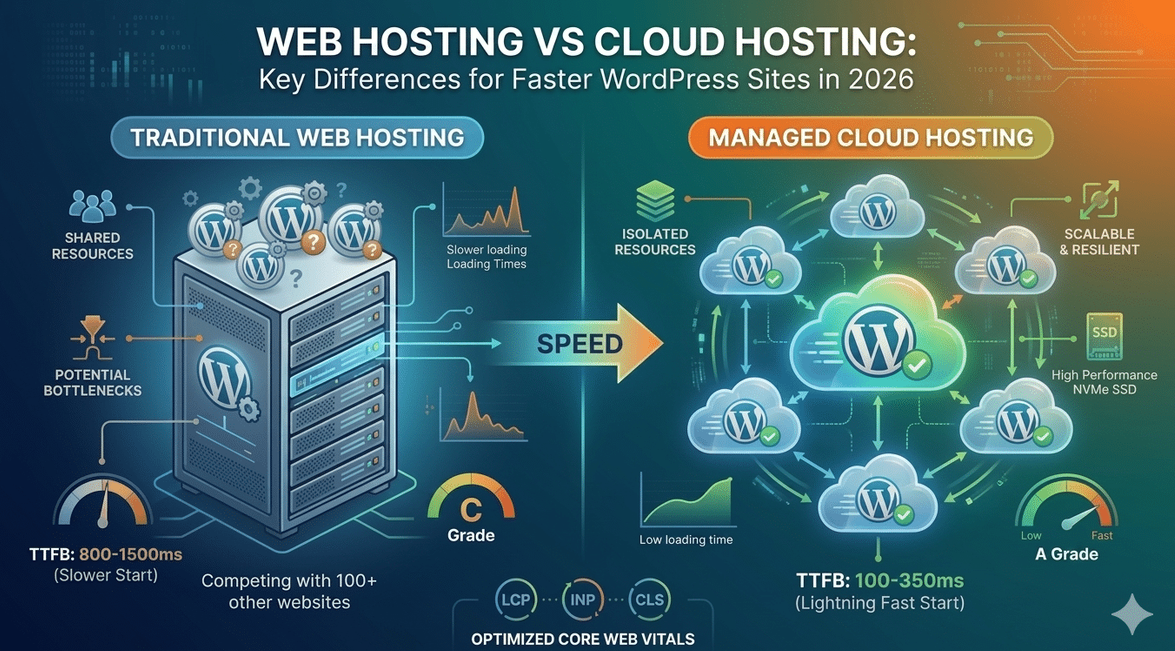
In today’s digital marketplace, website performance directly impacts customer trust, search engine rankings, and online revenue. Whether you operate an eCommerce store, corporate website, SaaS platform, agency portfolio, or membership site, choosing the right hosting infrastructure is one of the most important business decisions you’ll make.
Many businesses begin with shared hosting because it is inexpensive. However, as traffic grows and business operations become more demanding, shared hosting quickly becomes a limitation. Slow page loading, limited resources, security vulnerabilities, and unexpected downtime can negatively affect customer experience and conversion rates.
This is where managed cloud hosting for WordPress business sites becomes the ideal solution.
Managed cloud hosting combines the flexibility and power of cloud infrastructure with professional server management. Instead of maintaining Linux servers, configuring security patches, optimizing PHP versions, monitoring uptime, or creating backups yourself, the hosting provider manages these technical tasks.
This comprehensive guide explains everything business owners need to know before investing in managed cloud hosting.
What is Managed Cloud Hosting?
Managed cloud hosting is a premium hosting service where websites run on cloud-based infrastructure while experienced engineers handle server administration.
Unlike traditional hosting, cloud servers distribute resources across multiple physical machines. This architecture offers:
- Higher reliability
- Better scalability
- Faster loading times
- Automatic backups
- Advanced security
- Professional technical support
Business owners can focus on growing revenue instead of maintaining servers.
Why Businesses Choose Managed WordPress Cloud Hosting
WordPress powers more than 40% of websites worldwide because it is flexible, SEO-friendly, and easy to manage.
Business websites require hosting that can support:
- High visitor volumes
- WooCommerce stores
- Customer databases
- Secure payment processing
- Marketing automation
- CRM integrations
- API connections
- High uptime
Managed cloud hosting is specifically designed to meet these needs.
Major Benefits
1. Exceptional Website Speed
Website loading speed influences:
- Google rankings
- Bounce rate
- Conversion rate
- Customer satisfaction
Cloud hosting typically includes:
- NVMe SSD storage
- HTTP/3 support
- LiteSpeed or Nginx
- PHP optimization
- Built-in caching
- CDN integration
Pages often load in under two seconds.
2. Automatic Scaling
Business traffic is unpredictable.
Holiday sales, viral marketing campaigns, or successful advertisements can increase visitors by hundreds or even thousands of percent.
Cloud infrastructure automatically scales resources without causing downtime.
3. Enterprise-Level Security
Managed providers continuously protect websites using:
- Malware scanning
- Web Application Firewalls
- DDoS mitigation
- Intrusion detection
- Automatic updates
- Login protection
- SSL certificates
- Daily vulnerability monitoring
This dramatically reduces cyber risks.
4. Automatic Daily Backups
Backups are essential for business continuity.
Most managed providers offer:
- Daily backups
- Hourly backups
- One-click restoration
- Off-site storage
- Backup retention
- Snapshot recovery
A failed plugin update no longer becomes a disaster.
5. Professional Technical Support
Instead of generic support, managed WordPress providers employ engineers familiar with:
- WooCommerce
- Elementor
- PHP
- MySQL
- Redis
- Nginx
- CDN configuration
- WordPress optimization
Expert assistance significantly reduces downtime.
Managed Cloud Hosting vs Shared Hosting
| Feature | Shared Hosting | Managed Cloud Hosting |
|---|---|---|
| Performance | Moderate | Excellent |
| Scalability | Limited | Automatic |
| Security | Basic | Enterprise |
| Resource Isolation | Limited | High |
| Daily Backups | Sometimes | Included |
| CDN | Optional | Often Included |
| Server Management | User | Provider |
| Uptime | Moderate | Excellent |
Ideal Businesses
Managed cloud hosting works exceptionally well for:
- Online stores
- SaaS companies
- Marketing agencies
- Professional consultants
- Law firms
- Medical clinics
- Educational platforms
- Membership websites
- News publishers
- Enterprise blogs

Important Features to Look For
Global Data Centers
Choose providers with multiple server locations.
Benefits include:
- Lower latency
- Better SEO
- Faster international performance
Free SSL
HTTPS is mandatory for:
- Customer trust
- Secure payments
- Better rankings
Every reputable provider includes SSL certificates.
Built-in CDN
A Content Delivery Network distributes files globally.
Advantages include:
- Faster images
- Lower latency
- Better Core Web Vitals
- Reduced server load
Staging Environment
Before updating plugins or themes, businesses should test changes on a staging site.
This prevents production website failures.
One-Click Restore
Quick restoration saves businesses from:
- Hacking incidents
- Plugin conflicts
- Human mistakes
Automatic Updates
Many providers automatically update:
- WordPress core
- Security patches
- PHP versions
This minimizes vulnerabilities.
Performance Optimization
Managed cloud hosting includes multiple optimization technologies.
These include:
- Object Cache
- Redis
- Memcached
- OPcache
- GZIP Compression
- Brotli Compression
- Image Optimization
- Lazy Loading
- HTTP/3
- QUIC Protocol
Together, they significantly improve website speed.
SEO Advantages
Google rewards websites that are:
- Fast
- Secure
- Stable
- Mobile-friendly
Managed cloud hosting contributes to better:
- Core Web Vitals
- Largest Contentful Paint
- First Input Delay
- Interaction to Next Paint
- Cumulative Layout Shift
Improved technical SEO often leads to higher rankings.
WooCommerce Performance
Online stores benefit enormously from managed cloud hosting.
Features include:
- Fast checkout
- Optimized databases
- Better session handling
- Object caching
- Payment reliability
Customers experience smoother shopping.
Disaster Recovery
Professional hosting includes:
- Automatic snapshots
- Server redundancy
- Failover infrastructure
- Off-site backups
- Recovery automation
Business continuity remains protected.
Cost Considerations
Although managed cloud hosting costs more than shared hosting, businesses save money through:
- Less downtime
- Better conversions
- Lower maintenance costs
- Improved SEO
- Reduced security incidents
Return on investment is often substantial.
Migration Made Easy
Most providers offer free migration.
Migration generally includes:
- Website files
- Databases
- Email configuration
- SSL installation
- DNS assistance
Downtime is usually minimal.
Security Checklist
Businesses should ensure hosting includes:
- Firewall
- Malware scanner
- Login protection
- Two-factor authentication
- Daily backups
- DDoS protection
- Automatic patching
- SSL encryption
Common Mistakes
Avoid these hosting mistakes:
- Choosing the cheapest plan
- Ignoring backup policies
- Overlooking support quality
- Skipping CDN
- Using outdated PHP versions
- Not monitoring uptime
- Forgetting security updates
Future of Managed Cloud Hosting
Emerging technologies include:
- AI server optimization
- Predictive scaling
- Automated threat detection
- Green cloud infrastructure
- Edge computing
- Serverless integration
- Enhanced caching
- AI security monitoring
Businesses adopting these innovations gain competitive advantages.
Frequently Asked Questions
Is managed cloud hosting worth it?
Yes. Businesses benefit from higher speed, stronger security, expert support, and automatic maintenance.
Is it suitable for WooCommerce?
Absolutely. WooCommerce stores often experience better checkout performance and improved reliability.
Does it improve SEO?
Indirectly, yes. Faster websites with better uptime and stronger Core Web Vitals generally perform better in search engines.
Can beginners use managed hosting?
Yes. Most technical server management is handled by the provider.
Is cloud hosting more secure?
Generally yes, especially when combined with proactive monitoring, automated updates, and enterprise-grade firewalls.
Final Thoughts
Choosing managed cloud hosting for WordPress business sites is one of the smartest long-term investments for companies that rely on their websites to generate leads, sales, or customer engagement. Instead of worrying about server maintenance, security updates, and performance tuning, businesses can focus on marketing, customer service, and growth.
Modern managed cloud platforms provide exceptional reliability, automatic scaling, advanced security, built-in backups, and expert WordPress support. As online competition increases and search engines continue to prioritize speed and user experience, businesses that invest in high-performance managed cloud hosting gain a meaningful advantage in SEO, conversions, and customer satisfaction.
For startups, growing companies, agencies, and enterprise organizations alike, managed cloud hosting offers the ideal balance of performance, security, scalability, and operational efficiency.